

Get paid between visits
Chronic care management services
One Care Advocate per patient, the same person every time. Your practice bills under its own license.
- No new hires. We run outreach, consent and monthly calls.
- One file a month. Nothing is billed until you approve it.
- $0 upfront. Works with your EHR, live in about a week.
$66.13* per patient, every month*CPT 99490, 2026 national rate
Get your CCM Plan
Works nationwide
Practices nationwide
You bill under your own NPI
Same Care Advocate every month
RNs, NPs, LCSWs and care companions
Monthly file approved by your team
No new hires needed

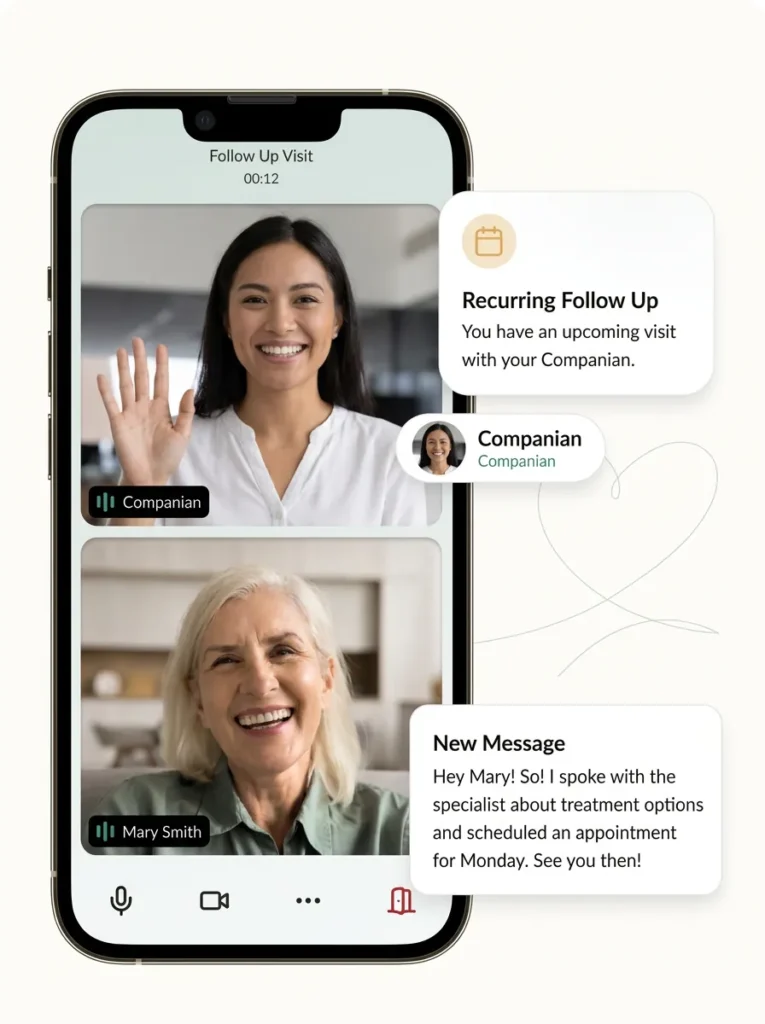

One Care AdvocateSame person, every month
Your NPI, your claimYou bill Medicare directly
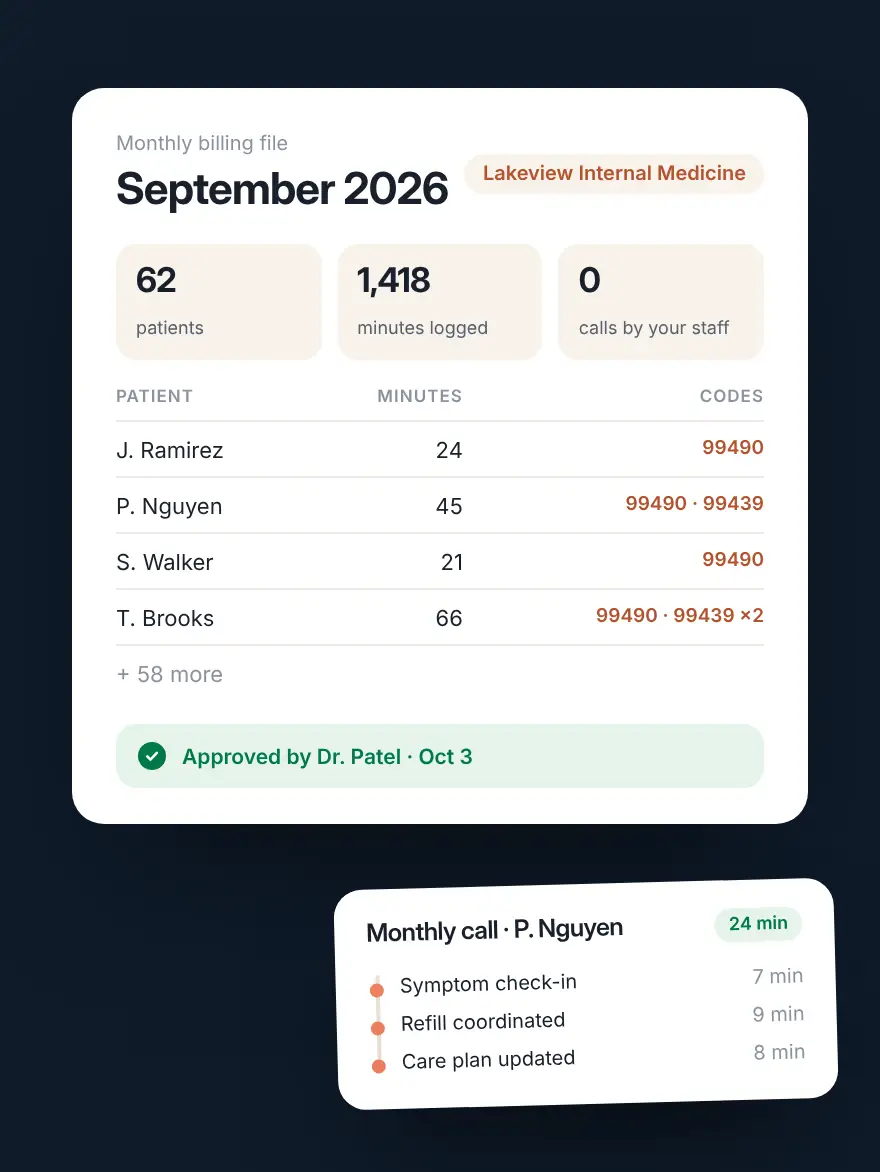
Monthly billing fileYour team approves it
No upfront cost to the practice. Your team refers, we handle enrollment, outreach and documentation, and you bill Medicare under your own license. We connect with your EHR in about one week, and have worked with eClinicalWorks, Tebra and athenahealth.
What your patients get between visits
Chronic care management services built around one person your patients know.
The same Care Advocate
One person per patient, by phone or video, every month. Registered nurses, nurse practitioners, licensed clinical social workers and care companions.
Calls that follow your care plan
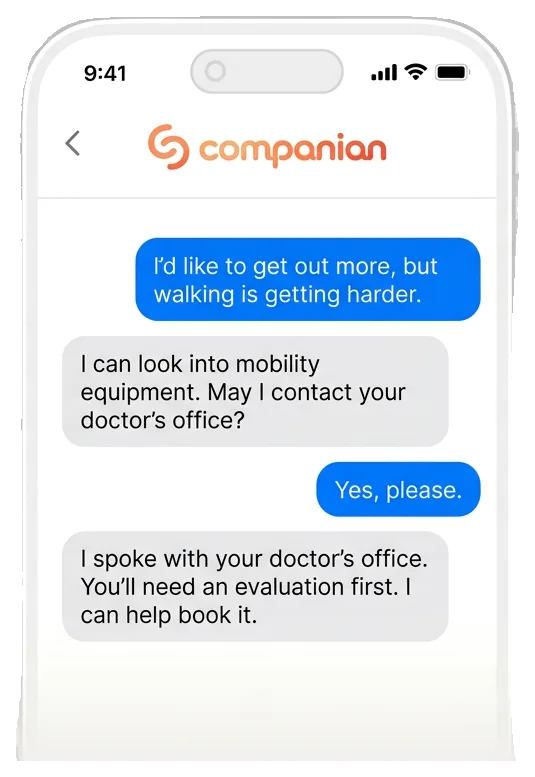
Your practitioner sets the plan. The Care Advocate works from it and routes anything new to your clinicians.
Coordination outside your office
Other providers and community resources, as the CMS care plan requires.
A pre-visit summary
Gloria, our AI assistant, drafts what changed since the last visit. People make every call.

What 200 CCM patients bring in each month
2026 Medicare-allowed amounts, and the diagnosis codes that qualify.
Example panel
$13,226 / month
$158,712 a year · 200 patients × $66.13 (CPT 99490, national)
- CPT 99490 pays $66.13 per patient-month nationally (2026).
- Your locality moves it up or down: $60.71 in Arkansas to $83.76 in Alaska.
- Each extra 20 minutes adds CPT 99439 at $50.44.
| Condition | ICD-10 examples | Program fit |
|---|---|---|
| Two or more chronic conditions | e.g. I10 with E11.9 | CCM (99490, 99439) |
| Complex care plan, 60+ minutes | e.g. I50.22 with N18.4 | Complex CCM (99487) |
| One serious condition | e.g. J44.9 | PCM (99426) |
| High-risk condition, navigation needs | e.g. C34.90 | PIN (G0023) |
How a CCM month runs
One calendar month is one billing period.
Day one: the panel is current
New referrals arrive by referral form or EHR access. Patients who opted out last month are off the list.
The check-in call
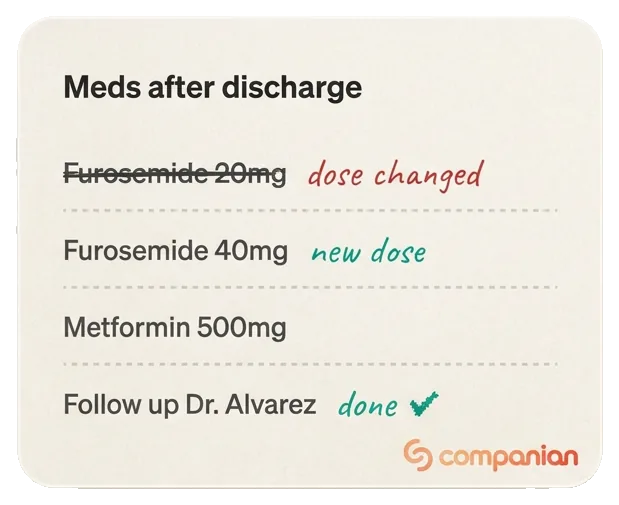
The Care Advocate works through the care plan’s goals, symptoms and medication questions, recording each answer.
Between calls
Specialist and lab visits are confirmed with the patient. Every contact is timed and tagged by activity.
Month end
Minutes are totaled against the code thresholds. Nothing reaches Medicare until your billing team approves the file.
Which patients qualify
CMS sets the rules. Your practitioner decides who is referred.
Two or more chronic conditions
Expected to last at least 12 months, or until death, and placing the patient at significant risk of death, decompensation or functional decline. Our explainer on what chronic care management is sets out the program basics.
An initiating visit
For new patients or anyone not seen in a year: a comprehensive E/M visit, an annual wellness visit or an IPPE.
Documented consent
Verbal or written, recorded before the first claim. The patient hears about cost-sharing and that only one practitioner can bill CCM each month.
Hypertension, diabetes, heart failure, COPD, chronic kidney disease and depression can all count; the mix and the risk decide. See the full list of eligible conditions.
Who covers each requirement
Your practice keeps what CMS ties to the billing practitioner. We do the monthly work.
| Requirement | Your practice | Companian |
|---|---|---|
| Initiating visit | Your practitioner sees the patient | — |
| Consent | Keeps it on file | Explains the program and documents verbal consent |
| Care plan | Your practitioner writes it | Works from it every month |
| 24/7 access | Your after-hours line | The designated care team member for routine contact |
| 20 minutes a month | Approves the file | Times and records every activity |
| Supervision | General supervision by the billing practitioner | Works under it, as set out in the services agreement |
| The claim | Bills Medicare under its own NPI | Never bills Medicare |
Where CCM claims go wrong
- The month falls short. 99490 needs 20 minutes of clinical staff time in the calendar month. Time is logged as it happens, not rebuilt later. Our guide to CCM billing walks through the full claim process.
- Codes that cannot share a month. Regular and complex CCM cannot share a month. Neither can CCM and APCM from the same practitioner.
The full checklist is in chronic care management requirements.
What CCM pays in 2026
Same CMS rules nationwide; your locality sets the rate.

| Code | Service | National 2026 |
|---|---|---|
| 99490 | First 20 minutes | $66.13 |
| 99439 | Each additional 20 minutes | $50.44 |
| 99487 | Complex CCM, first 60 minutes | $144.29 |
| 99489 | Complex CCM, each additional 30 minutes | $78.16 |
| 99491 | Practitioner’s own time, first 30 minutes | $89.18 |
Your MAC pays the claim
Practices bill Part B through their regional Medicare Administrative Contractor. FQHCs and RHCs are paid the national amount; see FQHC and RHC care management.
Three payment localities
Medicare pays by payment locality, set by state and county: 109 localities nationwide. For CPT 99490 the 2026 amount runs from $60.71 in Arkansas to $83.76 in Alaska.
At 150 patients on the national rate, 99490 alone is about $9,920 a month in allowed amounts, patient share included. Every scenario is in the CCM reimbursement guide.
Outsourced or in-house
Both models bill the same codes. The difference is who carries the staffing.
Building it in-house
You hire, train and cover a nurse or medical assistant, buy software and track time yourself.
- Salary and benefits from day one
- Coverage gaps when staff leave
- Enrollment competes with front-desk work
Working with Companian
Remote Care Advocates do the monthly work.
- No new hires
- One file a month to approve
- Your clinicians keep every decision
What chronic care management costs your practice and your patients
Two costs to know before you start.
For practices
Your practice bills Medicare under its own license and receives the payment for the services billed. We walk through Companian’s fee on the intro call.
For patients
Medicare Part B cost sharing applies: the deductible and 20% coinsurance. Supplemental or Medicaid coverage may pay it. Patients hear this before they consent.
When to use PCM, APCM, PIN or CHI
Two replace CCM for a patient; two add to it. Your practitioner chooses.
Principal care management
For one serious, high-risk condition expected to last at least three months. 99426 needs 30 minutes of clinical staff time a month.
Advanced primary care management
For practitioners responsible for all of a patient’s primary care: one monthly code, G0556 to G0558, no minimum minutes. Set up practice by practice.
Principal illness navigation
For one serious, high-risk condition, such as a new cancer diagnosis, that needs navigation. G0023 and G0024 need condition-trained staff and yearly consent.
Community health integration
When an unmet social need, such as housing, food or transport, blocks diagnosis or treatment. G0019 and G0022 start after your practitioner’s initiating visit.
CMS allows PIN and CHI on top of CCM when no minute counts toward both.

Questions about chronic care management services

Can a practice outsource chronic care management?
Yes. Clinical staff can furnish CCM under the billing practitioner’s general supervision, outside your office. The services agreement sets out supervision; confirm it with your counsel.
Can we bill CCM and remote monitoring for the same patient?
Yes, with either remote physiologic or remote therapeutic monitoring, not both, and no minute counted twice.
Can we bill CCM after a hospital discharge?
Yes. CMS allows CCM during the 30-day transitional care management period, as long as no minute is counted twice.
What if a patient already works with our care coordinator?
You decide who is referred. Patients your coordinator already manages can stay with them.
What access to our records do you need?
The minimum needed to reach the patients you refer and document their care, through EHR access or a short referral form.
What do we keep for an audit?
The monthly file your team approves, plus the care plan and initiating visit in your own records.
Rates & disclosures
National amounts are 2026 Medicare Physician Fee Schedule non-facility payments at the non-QP conversion factor of $33.4009, computed from CMS RVUs. Your amount depends on your Medicare payment locality; see it in the CCM/PCM revenue calculator. Actual payment depends on participation status, place of service and cost-sharing.
Companian supplies Care Advocates and documentation to physician practices nationwide. Companian is not a medical practice and does not bill Medicare. The billing practitioner keeps the care plan, every clinical decision and the claim. Patients pay the usual Medicare Part B deductible and coinsurance for these services unless other coverage pays it.
Offer CCM without hiring a care manager
Fifteen minutes on which programs fit your patients. No patient information needed.